
Returning home after a hospital or facility discharge
Help after you come home.
Transitional care management can support the move from a hospital or facility to home.
Explore the pathway

For older adults. At home. By phone.
A friendly AI voice calls to ask how you feel. If it identifies a concern during your call, it sends it to a licensed nurse practitioner for review. Your care plan guides the next step.
See what happens on a call and how to get started.
See the check-in and clinical review workflow.
Explore support or discuss a partnership. For older adults, including people with Medicare. We support you after discharge, while living with ongoing health conditions, and in senior living communities. Ask about support for yourself or someone you love. Your coordinator checks availability, coverage and costs. Your nurse practitioner makes the care plan.
Ask about availability ↗Care that fits real life
Start with your situation. Each pathway explains what support can involve, who directs your care and what to ask before enrollment.
Returning home after a hospital or facility discharge
Transitional care management can support the move from a hospital or facility to home.
Explore the pathway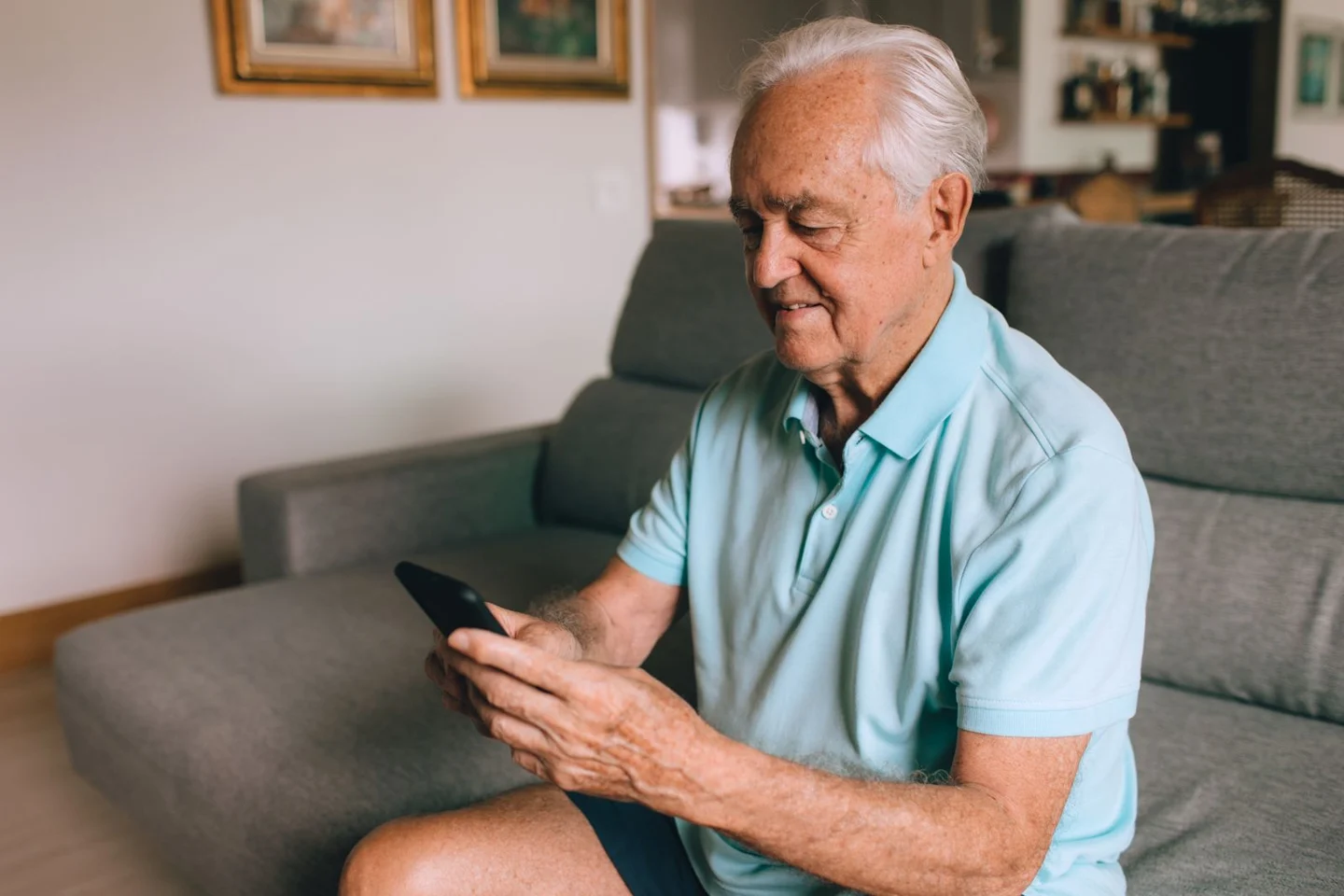
Living with a condition
Chronic care management brings ongoing questions and coordination into a clinician-led plan.
Explore the pathway
Senior living communities
Explore how scheduled check-ins can complement residents’ care and on-site support.
Explore the pathwayHow it works
You answer. You tell us how you feel. A nurse practitioner reviews concerns identified during the call and decides what care is needed.
See how it worksScheduled calls do not provide continuous or between-call monitoring. For an emergency, call 911.
A coordinator helps with eligibility, costs, consent and scheduling.
A nurse practitioner assesses your needs and creates your care plan.
An AI voice calls your mobile phone or landline to ask how you feel.
Concerns identified during the call go to a nurse practitioner, who decides the next step.
Before you take the next step
Understanding the service should be simple. Here are the essentials, together in one place.
Your enrollment coordinator reviews basic eligibility, coverage and expected costs before enrollment. We do not promise free care.
Understand coverage ↗You choose who may receive updates. Information follows your permission and the approved care workflow.
Read the family guide ↗No app or internet connection is needed for the scheduled call. A mobile phone or landline is enough.
See the call experience ↗A licensed clinical partner directs care. Automated calls do not diagnose, prescribe or replace emergency services.
Explore care programs ↗Designed around people
No new app for the scheduled call. Space to find your words. Family involvement with your permission.
Use your mobile phone or landline for the scheduled voice check-in.
Ask for a question again. Share your experience in your own words.
Include a family member or caregiver within the authorized care workflow.
The first 30 days
A discharge plan meets real life: prescriptions to collect, appointments to keep and questions that appear once you are home.
Read the discharge guideConfirm your care team, follow-up instructions and the people you want involved.
Scheduled calls give you an opportunity to describe how things are going.
Patient-reported changes enter the agreed review process. The clinician determines the next step.
Privacy. Accessibility. Clear responsibilities.
These standards describe our safeguards and responsibilities. Ask about programs and availability. An enrollment coordinator helps you check availability and basic eligibility, review coverage and expected costs, and complete consent and scheduling. A participating nurse practitioner assesses your care needs and develops your care plan.
A partnership with clear roles
For the teams who care
KindlyMoments offers phone-based check-in technology and administrative coordination for clinician-directed care. Our model supports independent licensed clinical partners, who retain responsibility for clinical services and billing.
We’re welcoming conversations with clinician practices, hospitals, home health teams, senior living communities and care organizations.
Request a demoGet to know KindlyMomentsAsk about programs and availability. An enrollment coordinator helps you check availability and basic eligibility, review coverage and expected costs, and complete consent and scheduling. A participating nurse practitioner assesses your care needs and develops your care plan. You can contact us with a general question or discuss a partnership. An inquiry does not enroll you in care.
Transitional care management can include contact after a qualifying discharge, a clinical visit, medication review and coordination around the discharge plan. A phone check-in supports that pathway; it does not replace the required clinical services.
No. A scheduled phone conversation does not provide bathing, dressing, meals, transport or in-person supervision. Discuss hands-on support needs with your usual care team.
No. Independent licensed clinical partners direct clinical services. KindlyMoments supplies technology and administrative support.
Use Request a demo to reach the care-partner inquiry form. Tell us your organization and the workflow you would like to discuss. Review your details and submit your request, or email help@kindlymoments.com to arrange a conversation; a demo request does not book an appointment automatically.
Please do not send medical records, symptoms or insurance identifiers through the public inquiry form. Clinical information belongs in the clinical partner’s approved secure process.
KindlyMoments is designed for older adults returning home after a hospital, surgery or skilled nursing stay, people living with ongoing health conditions, and residents of participating senior living communities. A clinical partner confirms whether a program fits your needs.
The scheduled voice check-in uses a regular mobile phone or landline. You do not need an app or internet connection for the call. Device-based remote patient monitoring is a different service and is not implied by a daily phone call.
Yes. An AI voice asks the check-in questions and tells you it is automated. You answer in your own words. A nurse practitioner makes care decisions. The AI does not diagnose or prescribe.
A nurse practitioner reviews concerns identified during your call and decides the next step. We do not monitor you between calls or promise a response time.
Some clinician-provided transitional care management and chronic care management services may be covered when program and payer requirements are met. Coverage, copayments and deductibles depend on your plan. The enrollment coordinator helps review coverage and expected costs before enrollment; a website inquiry is not an eligibility decision.
Information is shared only with people you authorize and within the approved care workflow. Family updates contain the information appropriate to that role, rather than unrestricted access to clinical notes or every call detail.
Contact your usual care team using their established instructions. Call 911 for an emergency. Call or text 988 for a mental health crisis. Do not wait for a KindlyMoments call or a reply to a website inquiry.
Tell the enrollment team your language and scheduling preferences. English or Spanish availability is confirmed for your specific referral pathway. Participation is voluntary; the team explains how to pause or stop routine calls.
A typical conversation takes about five minutes. The length depends on the questions in the care plan and what you want to share. Confirm the actual schedule before enrollment.
Ask the enrollment team to explain repeat attempts and any authorized family or care-team contact. A missed call does not automatically trigger a welfare check or an emergency response.
Home health can include in-person nursing, therapy and other services. KindlyMoments focuses on scheduled phone check-ins and administrative support within a clinician-directed plan. It does not replace home visits or hands-on care.
Discuss communication needs or cognitive challenges with the clinical partner. A suitable authorized caregiver may be involved when the care arrangement supports it. The team confirms consent and the appropriate process.
Independent licensed clinical partners direct clinical care and make treatment decisions. KindlyMoments supplies technology and administrative support. Ask which provider would be responsible for your specific arrangement.
A participating community may offer a referral pathway. The clinical partner confirms suitability and how calls fit alongside on-site staff and existing services.
The automated assistant does not prescribe or change medication instructions. Raise medication questions with your treating clinician and follow the instructions they provide.
No. Device-based remote patient monitoring is a separate pathway with its own equipment and clinical requirements. Device-based RPM is listed as a planned service, not an available enrollment option.
No. A website inquiry is a request for information. Enrollment, consent, clinical suitability, service availability and costs are confirmed separately.
Yes. Contact help@kindlymoments.com with a general privacy, accessibility or partnership question. The team can discuss the appropriate documents and due diligence for the proposed arrangement.
Our approach to evidence
Meaningful support starts with clear questions about engagement, follow-up and care coordination. These are the areas that guide our measurement approach.
Clinical outcomes require validated data and a stated methodology. Illustrative scenes and interfaces are not evidence of patient results.
Are scheduled check-ins reaching the people they are designed to support?
Do concerns enter the agreed clinical review and follow-up process?
Do patients, families and care teams understand their next step?
A little more connection.